Pull up a few different sources for Lower Rattlesnake in Missoula and you will get a few different neighborhoods. One trailing twelve-month measure puts the median sale price near $760,000, up 13 percent from the year before. A snapshot from November 2025 puts the median at $782,000, with homes on the market that month ranging from $250,000 to $2,250,000. A few months earlier, in July 2025, the reported median spiked to $942,000, up nearly 35 percent year over year. A fourth measure, tracking asking prices rather than closed sales, showed the median falling both month over month and year over year as of November 2025. None of these sources is wrong. They are measuring a market so thin that a single sale can swing the headline number by six figures.
That volatility is worth understanding on its own. But it is not the most useful thing happening in this neighborhood right now. The more consequential story is about two railroad crossings, a two-decade noise complaint, and a 2026 funding decision that quietly split one neighborhood into two very different ownership experiences depending on which block you buy into.
Why the Number Won't Sit Still
Lower Rattlesnake sells in single digits most months. In July 2025, for example, Redfin counted just eight home sales in the neighborhood that month, enough for one estate lot or one distressed fixer to move the median hundreds of thousands of dollars in either direction. That is the mechanical reason the reported price varies so much between sources and between months. It is not a data quality problem. It is what a small, tightly bounded, high-demand inventory pool looks like when you try to summarize it with a single statistic.
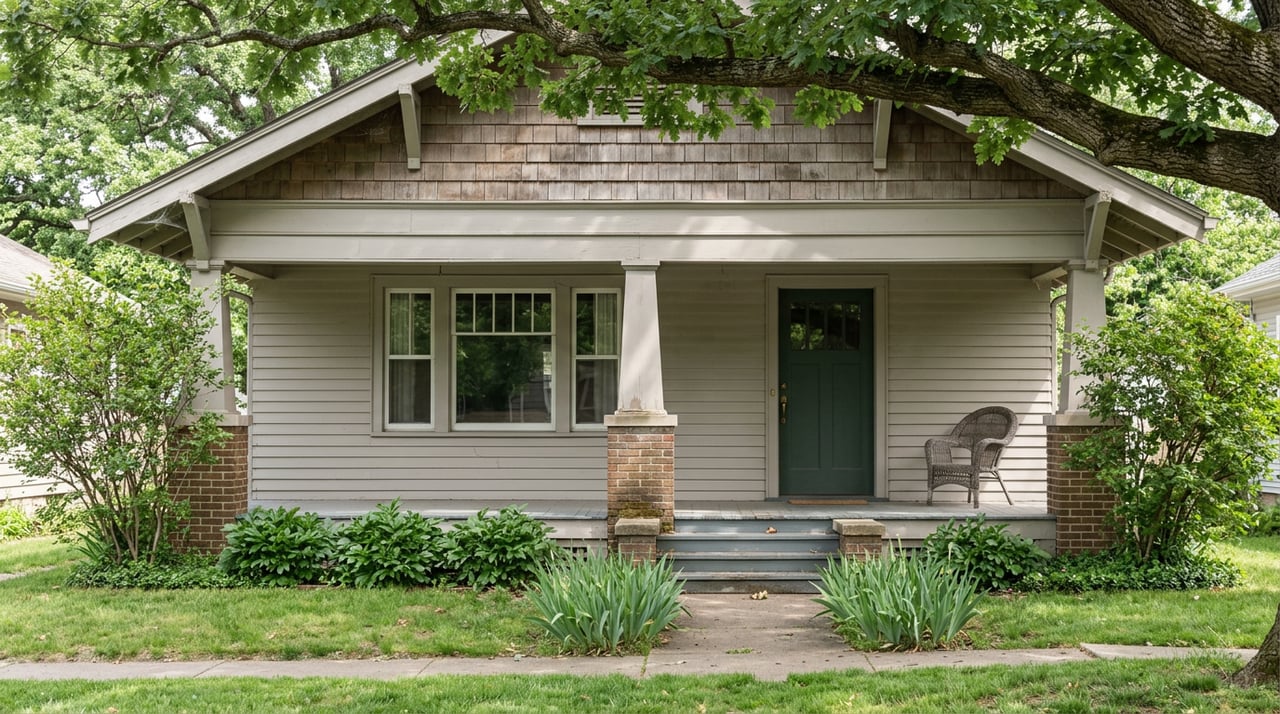
The neighborhood's draw is easy to see on the ground. Bungalows, Craftsmans and ranch houses dating to the early and mid-1900s sit along streets that back up to Greenough Park, with paved and forested trails following Rattlesnake Creek and a picnic pavilion and playground inside the park itself. The Mount Jumbo trailhead sits at the neighborhood's southeast edge. Kids attend Rattlesnake Elementary and Washington Middle before Hellgate High, which offers an International Baccalaureate program. Groceries come from the small Rattlesnake Market or the full-size Albertsons on Broadway Street. Downtown is close enough to reach on foot for most residents.
None of that changed this year. What did change is the noise.
The Neighborhood Has Two Crossings, and Only One Got Fixed
Two Montana Rail Link crossings sit inside the neighborhood's boundaries: the public crossing at Madison, Spruce and Greenough, and a second, private crossing at Taylor Street just east of it. Both have required trains to sound their horns for safety for as long as most residents can remember. One longtime resident whose house dates to 1895 told a reporter in 2021 that the horns made her old window sashes shake, a problem she had lived with for 22 years by that point. A separate resident quoted in city coverage back in 2020 said rail traffic had grown far heavier than it was 20 years earlier, and that the horns themselves had gotten more powerful.
The city started studying a fix back in 2020, hiring Triple Tree Engineering, the same firm that had completed a railroad quiet zone in Helena, to test options at both crossings. A full Federal Railroad Administration quiet zone designation would have been far more expensive and taken years longer to secure, so the city pursued a cheaper alternative instead. A wayside horn directs sound at the crossing itself instead of blasting it across the neighborhood, and it does not require FRA designation. Testing showed it worked. In October 2021, the Missoula Redevelopment Agency approved a $200,000 contract to install one at the Madison, Spruce and Greenough crossing.
Then it stalled. The project needed a right-of-way occupancy permit and an equipment agreement from Montana Rail Link and BNSF before installation could begin, and those approvals took years rather than the "late spring to early summer 2022" timeline the city had originally hoped for.
By late 2025, the scope had grown. The city combined the original wayside horn project at Madison, Spruce and Greenough with a second fix at Taylor Street, where the plan called for new gate arms rather than a wayside horn. Together, the total project cost was estimated at $921,000. The Missoula Redevelopment Agency's original $200,000 commitment covered a fraction of that. To close the gap, the city surveyed property owners in November 2025 about forming a Special Improvement District, a mechanism that would let nearby owners fund the remainder through a new assessment.
The results came back in January 2026. Of roughly 758 respondents, 58.3 percent said they supported resolving the train horn noise. Only 40.5 percent supported paying for it through a Special Improvement District. In February 2026, the city dropped the district plan.
Here is where the story splits. The city's own transportation projects page shows the Madison, Spruce and Greenough wayside horn moving forward anyway, fully funded by the city with no property owner assessments required, going to bid in fall 2025 and breaking ground on March 2, 2026. The Taylor Street gate arms, which needed the Special Improvement District money that never materialized, do not have a funding source or a timeline. The city's own project page for that crossing still reads that staff cannot predict how soon the work can be completed.
| Crossing | Fix planned | Funding status as of 2026 | Construction |
|---|---|---|---|
| Madison / Spruce / Greenough | Wayside horn | Fully city-funded, no assessment needed | Began March 2, 2026 |
| Taylor Street | New gate arms | Special Improvement District rejected by property owners, gap unfilled | No date set |
What This Means If You're Comparing Blocks, Not Just a Median
A home a few blocks from Madison, Spruce and Greenough is now sitting in a neighborhood where a decades-long noise complaint is finally being resolved with public money and no bill to the homeowner. A home closer to Taylor Street is sitting in the same neighborhood, at the same reported median price, with the same park access and the same school assignments, but with an open-ended noise problem and no funded plan to close it.
That is a meaningfully different ownership experience hiding inside one portal's estimate or one site's neighborhood snapshot. If you are touring Lower Rattlesnake this year, ask which crossing a specific address sits closer to. Ask whether the seller or listing agent has any information about train frequency at that block. The horns at the two crossings have run on different clocks for years, and as of this year they are on different clocks for a different reason: one has a funded fix under construction, and the other does not.
This is also a useful lens for reading the price data itself. The neighborhood's premium comes from Greenough Park, Rattlesnake Creek access, and walkable proximity to downtown, all of which apply regardless of which crossing a house sits near. The noise history is a separate variable, one that has been getting quietly priced into individual sales for years without showing up as a line item anywhere.
What This Means If You're Selling
If your home sits closer to Madison, Spruce and Greenough, you now have a positive, verifiable, dated fact to bring into your listing conversation: the horn noise that shaped this block for decades is being addressed with public funds, construction already underway as of this spring. That is worth surfacing proactively rather than waiting for a buyer to ask.
If your home sits closer to Taylor Street, the more useful move is to get ahead of the conversation rather than let a buyer discover the funding gap on their own during due diligence. Buyers who do their homework will find the same public records this post is built on. Sellers who can speak plainly about what is resolved, what is pending, and what the timeline actually is tend to have smoother negotiations than sellers who let a buyer's agent uncover it first.
A Few Questions Worth Asking Directly
Does the Taylor Street crossing affect the whole neighborhood, or just nearby blocks? The noise from an at-grade rail crossing is fairly localized. Homes several blocks away from Taylor Street are less affected by that specific crossing, though they may hear trains from elsewhere along the line.
Will the Taylor Street gate arms eventually get funded? The city has said it is continuing to work with the railroad on solutions but has not committed to a new funding source or timeline since the Special Improvement District was dropped in February 2026.
Is any of this something a seller has to disclose? This post is not legal advice. If you are buying or selling near either crossing, a conversation with your agent about what is known and documented is worth having early, not after an offer is already in.
The wider Missoula market has been cooling toward balance, with the median sale price across the city up just 1.3 percent over the three months ending in May 2026 and homes taking a bit longer to sell than they did a year earlier. Lower Rattlesnake has not followed that pattern in any simple way, because it is not one market. It is two blocks with the same zip code and two very different 2026 stories.
If you are weighing a purchase or a sale in this neighborhood and want someone who tracks these details street by street, Cameron Hahn is happy to walk through what a specific address is really sitting next to. Schedule a free consultation and bring your questions about the crossings, the comps, or both.